
Solid Wood vs Engineered Cabinets: What to Choose

by Frank LeBlanc | Aug 12, 2026 | Kitchen Cabinets

Solid Wood vs Engineered Cabinets: What to Choose
Solid Wood vs. Engineered Cabinets: What to Choose for Your Kitchen

By the Seacoast Cabinet Team · Updated August 10, 2026

If you have started shopping for kitchen cabinets, you have probably seen "solid wood" used as a selling point and "engineered wood" treated like a compromise. The real picture is more practical. Most well-built cabinets use both, and each material earns its place in a different part of the cabinet. Here is how the two actually compare, and how to decide what belongs in your kitchen.

Key takeaways

  • Most quality cabinets mix materials: solid wood doors and face frames over a plywood box.

  • Plywood boxes resist warping and hold hinges and screws better than particleboard, and they stand up to kitchen humidity.

  • Solid wood doors can be sanded and refinished, so you can change the color later instead of replacing them.

  • MDF is the best surface for a smooth painted finish, because it has no grain to telegraph through the paint.

  • The right mix comes down to your budget, how humid the space is, and whether you want stain or paint.

Most quality cabinets mix materials: solid wood doors and face frames over a plywood box.

Plywood boxes resist warping and hold hinges and screws better than particleboard, and they stand up to kitchen humidity.

Solid wood doors can be sanded and refinished, so you can change the color later instead of replacing them.

MDF is the best surface for a smooth painted finish, because it has no grain to telegraph through the paint.

The right mix comes down to your budget, how humid the space is, and whether you want stain or paint.

When a cabinet is described as solid wood, that almost always refers to the doors and face frames, not the box behind them. Very few cabinets are built from 100 percent solid lumber, and that is by design. Solid wood expands and contracts as humidity changes, so a large solid panel can crack or warp over the years. Good cabinet makers use solid wood where you see and touch it, then build the box from engineered panels that stay flat and square. Reading that split correctly is the key to understanding any cabinet spec sheet.

What Is Each Part of a Cabinet Made Of?

A single cabinet is rarely one material. Each piece gets matched to its job. Doors and face frames are often solid hardwood like maple, oak, or cherry for grain, strength, and the ability to refinish later, though painted doors are frequently MDF for a glass-smooth finish. The box, meaning the sides, top, and bottom, is usually plywood, sometimes particleboard on lower-end lines. Drawer boxes on quality lines are solid wood with dovetail joints, and shelves are typically plywood. That is why "what is it made of" is really several questions, one for each part.

Does Plywood or Solid Wood Hold Up Better in a Kitchen?

For the box, plywood usually wins. It is built from thin wood layers bonded under pressure with the grain alternating direction, which makes it strong, stable, and resistant to the humidity swings a kitchen sees near a dishwasher or sink. It also grips screws and hinges tightly, so doors stay aligned. Solid wood boxes look appealing on paper but move more with moisture. Particleboard is the budget option, and while it works, it is heavier, weaker around screws, and swells if it gets soaked. On our American-made cabinet lines, the boxes are built from plywood rather than particleboard, which is one of the quieter differences between a showroom cabinet and many big-box options. Mantra, our value line, uses all-plywood boxes and still ships quickly, which shows you can get solid construction without a premium price.

Where Does Solid Wood Still Win?

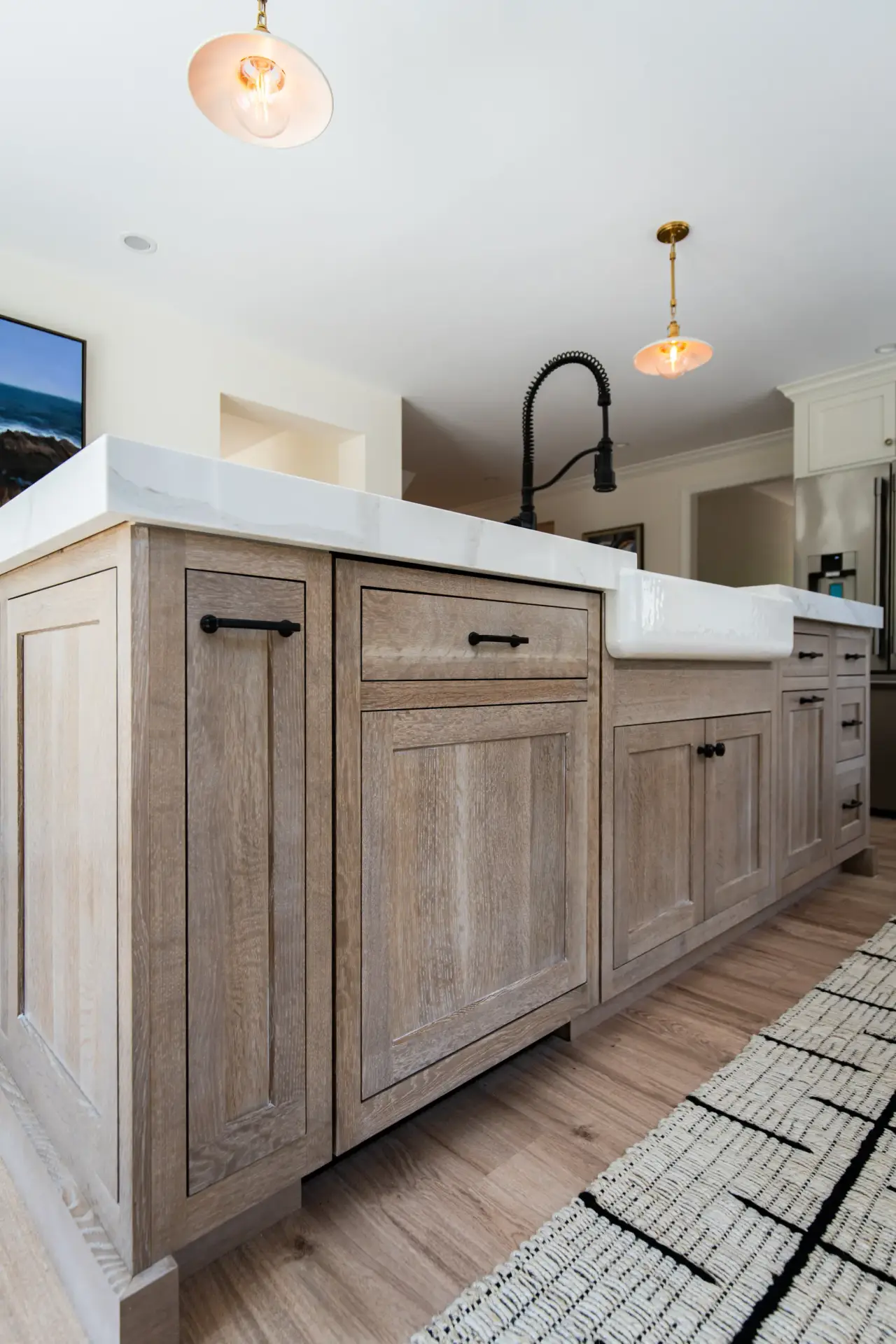
On the doors. Solid hardwood gives you natural grain that no two boards share, real depth under a stain, and the option to sand and refinish or repaint the doors years down the road instead of replacing them. If your boxes are still sound and you simply want a new color, refinishing the doors is often the smarter spend. Solid wood is also the better pick for a stained, wood-grain look, while MDF is the better pick for a flawless painted finish.

How Should You Choose for Your Kitchen?
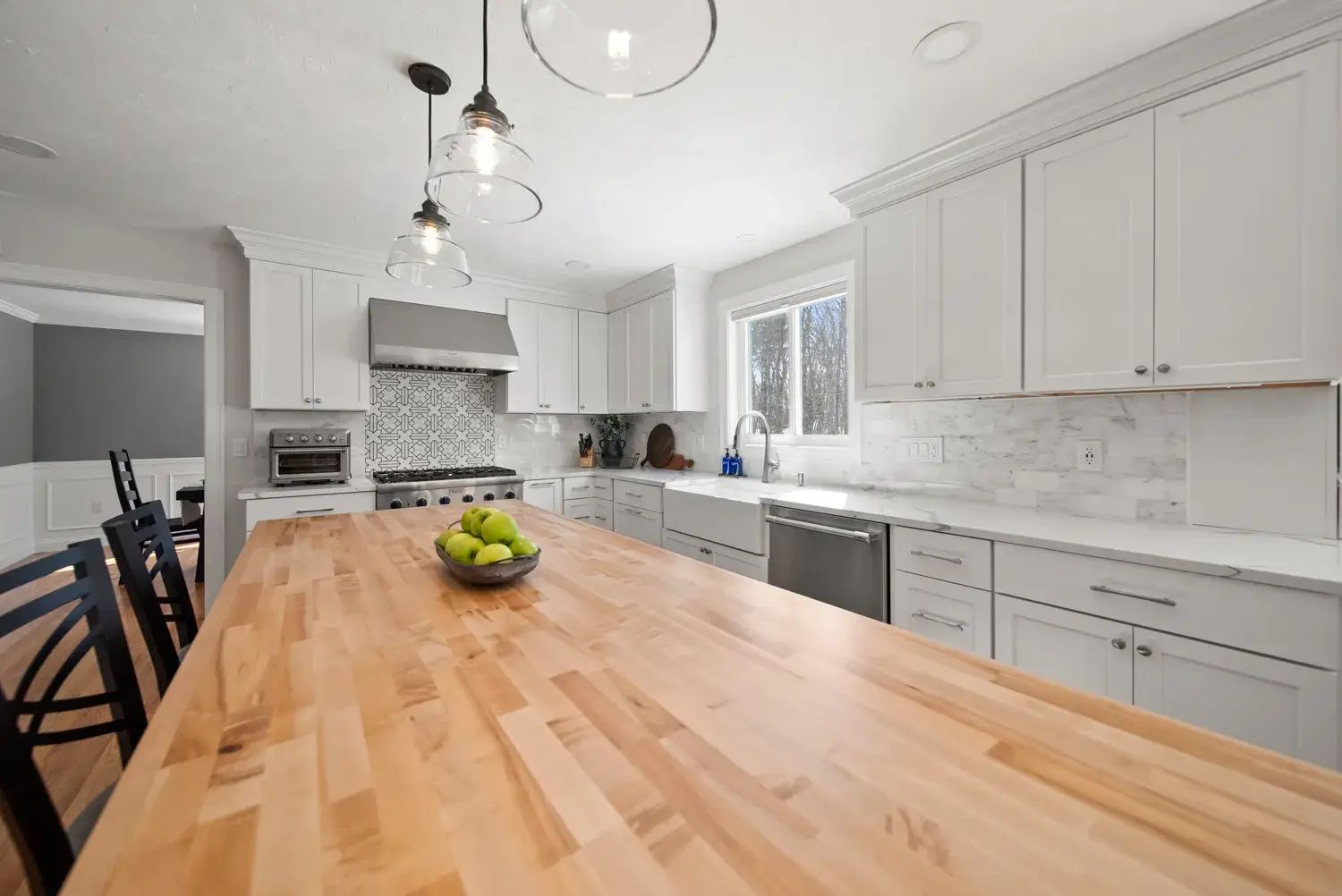
Three things drive the decision: your budget, how much moisture and daily traffic the kitchen takes, and whether you want stain or paint. A busy family kitchen benefits from plywood boxes and durable doors. A statement island might use solid wood doors for the grain. A crisp white kitchen usually points to MDF doors for the finish. No single answer fits every home, which is exactly why it helps to compare the four lines side by side and see samples before you commit.

See and Compare the Materials in Person

Photos flatten the difference between plywood, solid wood, and MDF. In our Rowley, MA showroom you can open the doors, feel the weight of the boxes, and compare finishes from all four of our lines side by side. Every project starts with a free design consultation, no pressure and no obligation, and our design team builds photorealistic 3D renderings so you can see your choices before anything is ordered. From the first measurement through final delivery, the same team stays with your project. Call 978-350-1040 or reach out to book a visit.